
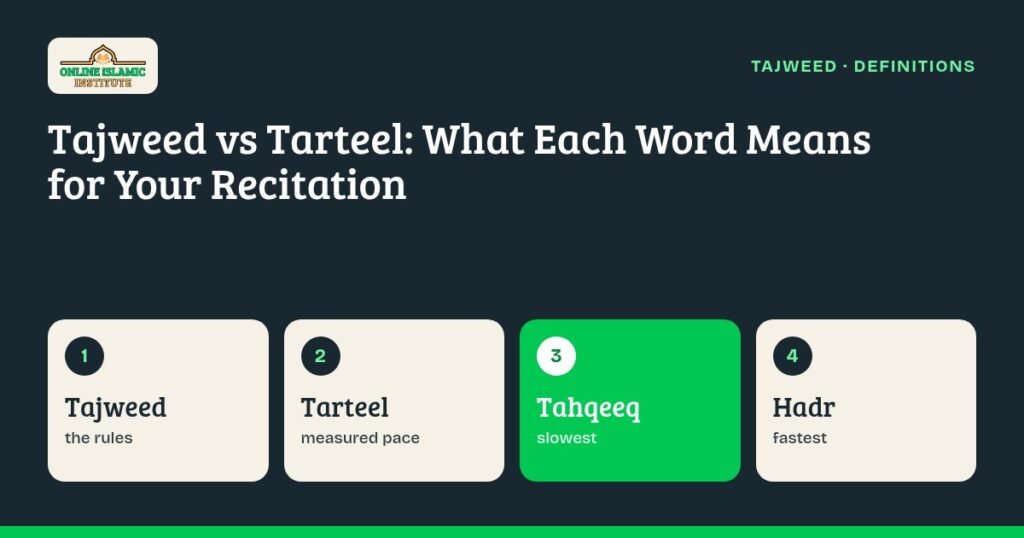
Parents in India often hear two words in the same sentence and assume they are twins: Tajweed and tarteel. A teacher praises “good Tajweed”; an uncle asks for “tarteel like the imam in tarawih”. They are related, but they are not the same thing. Mixing them up makes practice goals fuzzy.
This article separates the definitions in plain language, then introduces the classic speeds of recitation — tahqeeq, tadweer and hadr — so you know what your child is being asked to do in class.
Tajweed: the rules
Tajweed is the set of rules for pronouncing Quranic Arabic correctly: where each letter is formed, which letters are heavy or light, when to hum (ghunnah), when to merge, when to stretch a vowel, how to stop. It answers “is this sound right?”.
You can recite slowly with weak Tajweed, and you can recite a little faster with strong Tajweed. Speed is not the test. Correctness is. Our overview of Tajweed rules for beginners lists the building blocks, and why learn Tajweed covers the reasons families invest the time.
Tarteel: measured recitation
Tarteel means reciting in a measured, unrushed way, giving letters and meanings room to breathe. The Quran itself uses the word when it tells the Prophet ﷺ to recite in tarteel. In everyday Indian usage, when someone says “read with tarteel”, they usually mean: slow down, do not swallow words, let the Tajweed show.
So tarteel is more about the manner and pace of delivery. Tajweed is the rulebook that makes that delivery accurate. You aim for both: correct rules, recited in a measured way.
A simple comparison
| Tajweed | Tarteel | |
|---|---|---|
| Main question | Are the letters and rules correct? | Is the recitation measured and clear? |
| Focus | Makharij, ghunnah, madd, merging, stopping | Pace, clarity, composure |
| Can exist without the other? | You can know a rule yet rush it | You can go slowly yet mispronounce |
| In class | Teacher stops on a wrong sound | Teacher asks you to slow a line |
When a child “has Tajweed but no tarteel”, adults usually mean the rules are partly there but the reading is still breathless. When a child “reads slowly but without Tajweed”, the pace is calm while letters remain mixed. Name the real problem so practice time is not wasted.
The three speeds: tahqeeq, tadweer, hadr
Classical teachers describe three common tempos. All three should still obey Tajweed. None of them is an excuse to drop a rule.
Tahqeeq
The slowest, most careful pace. Every madd is given its count; every ghunnah is held; stops are clean. This is the speed for learning and for checking mistakes. Most one-to-one lessons spend a lot of time here, especially on new rules such as madd.
Tadweer
A middle pace: flowing, still clear, not hurried. Many everyday readings and a portion of tarawih sit near this range when the reciter is skilled. Students move here only after tahqeeq feels steady on that passage.
Hadr
The fastest of the three. Skilled reciters use it for review or longer portions while still keeping the rules. Beginners who jump to hadr usually clip madd and swallow noon sakin. If your child’s “fast” reading invents new mistakes, return to tahqeeq on that page.
What this means for practice at home
- Ask the teacher which speed tonight’s homework should use. Default to tahqeeq for anything new.
- Do not chase YouTube speeds. Famous reciters have years of Tajweed behind the flow you hear.
- If relatives ask for “tarteel”, translate it for the child as “slow and clear”, then stick to the teacher’s rule focus for the week.
- Record one ayah at tahqeeq and the same ayah a little quicker; listen for which rules break when speed rises.
Common ear habits — rushing, mixing look-alike letters, uneven madd — are collected in common mistakes in Quran recitation. Fix those at slow speed first.
How classes usually build this
A sensible path is: clear letters, then core Tajweed rules at tahqeeq, then short passages at tadweer once the teacher hears stability. Hadr waits. Our guide on how to learn Tajweed online sketches that order for adults and teens; children follow the same idea in smaller bites.
In our online Tajweed classes the teacher listens live, one-to-one, for 30 minutes, five days a week (20 a month), and will tell you plainly whether the goal today is a rule, a slower pace, or both. Classes run 24/7 in IST with male and female teachers available any time.
Fees at this online Islamic institute are ₹4,000 a month, ₹21,000 for six months or ₹36,000 a year; see the fee section.
For parents who learned “by ear” as children
Many of us grew up reciting quickly in a local style and only met rule names as adults. That history is not a failure. It simply means your ear may accept a rushed reading that a teacher will gently slow down. Sit in on a trial class if you can. Hearing the difference once is worth more than three articles.
If your child corrects you at home, take it with a smile. The goal is the Quran read correctly, not protecting an old habit.
Tajweed vs tarteel: short FAQ
Tajweed is the rules of correct pronunciation. Tarteel is measured, unrushed recitation. You need the rules and a calm pace together.
Tahqeeq is the slowest careful speed of recitation, used for learning and precision. Rules are applied fully.
Tadweer is a medium, flowing pace that still keeps Tajweed. Students use it after a passage is solid at tahqeeq.
Hadr is the fastest of the three classical paces. It still requires Tajweed; beginners should not rush into it.
You can recite slowly, but without Tajweed the letters may still be wrong. Slow and incorrect is not the goal; measured and correct is.
Ask the teacher. For new rules, tahqeeq is the usual answer.
Want a teacher to tell you whether your reading needs rules, a slower pace, or both? Book 3 free trial classes; pay only after the trial if you continue.